Buying from overseas suppliers without getting burned takes more than a good price. It takes a system: define the product exactly, check the manufacturer, agree a contract with the right Incoterm (International Commercial Terms), tie payment to documented milestones, inspect production in stages, and hand the freight to people who move goods every day. With every layer in place, problems surface early, not after your money is gone.
Most importers who get badly burned started out focused on the unit price. They learn too late that one shipment of faulty goods, a customs seizure or a factory that disappears after a deposit costs more than all the inspections, credit checks and contract reviews they skipped. A few hundred dollars spent on prevention routinely saves tens of thousands in recovery.
What protects you when you buy overseas?
Safe buying works like a quality system for the whole deal, not only the product. You place independent checks at every handover, from the specification to delivery, so a problem in one layer is caught before it spreads.
Think of building a house on the other side of the world. You would never wire the builder a deposit and hope a house appears. You would have drawings, a builder you have checked, a contract, inspections at each stage and payments released only when each stage passes. Buying from a factory abroad follows the same logic. The factory is your builder and the ship is your moving van. The added challenge is that the builder works under a different legal system and may not share your assumptions about quality or deadlines.
Your drawings are the product specification and the quality standards you set. Checking the builder is supplier screening, often done by someone local who audits the factory. The stage inspections are checks before, during and after production that use statistical sampling to decide whether a batch passes. The payment schedule is tied to shipping documents and inspection reports, sometimes through a letter of credit. The moving van is a freight forwarder who books the carrier and handles the export papers, working with a customs broker who clears the goods into your country. Over all of it runs a simple risk register, so you can adjust before a disruption hits.
- Product specification
- Supplier screening
- Contract and Incoterm
- Payment terms
- Production and quality inspections
- Freight and customs clearance
- Delivery
- Risk register review
How do you define what you are buying and find a supplier you can trust?
Start with a detailed product specification, not a sketch and a hope. Then check suppliers with a structured process that compares total cost, capability and risk, not the unit price alone.
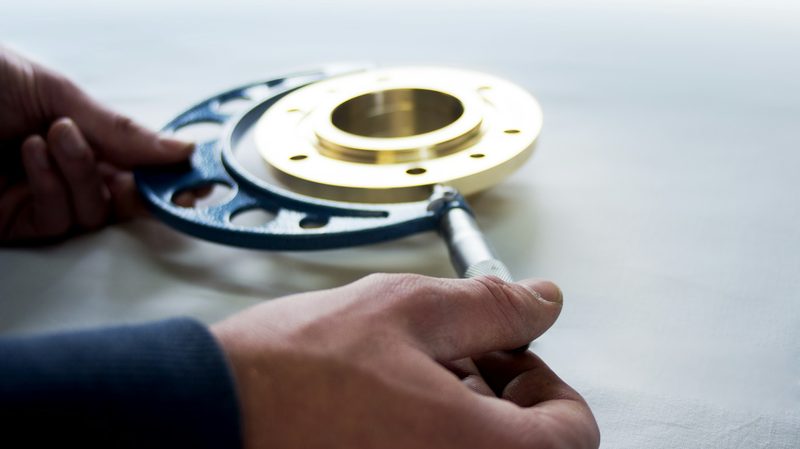
The specification turns “we need 1,000 of these” into a document that lists every dimension, material, colour reference, tolerance, packing requirement, label and standard the goods must meet. Every later step rests on it. Quotes become comparable because every manufacturer prices the same thing. Inspection checklists are built from it. Customs brokers use it to classify the product. Without it, the factory has to guess what you mean.
Supplier screening goes deeper than a website and a sample. Confirm the legal company and who owns it. Visit the factory, in person or through someone you trust on the ground. Check references, including buyers you find yourself, not only the ones the factory gives you. Find out whether the factory subcontracts any of the work, because that changes who controls your quality. Whoever does this work for you (your own buyer, an agent, or a supplier who handles the whole order), ask to see the evidence: the company check, the audit notes and the photographs.
Keep a record of the shortlist, so pressure to close a deal does not make you skip a check. A simple scoring sheet helps: delivery record, financial health, quality history, certifications and working conditions, weighted by what matters to you. By the time you choose, you should have a file of evidence, not just a price and a sample.
How do contracts and Incoterms divide the risk?
Your purchase contract sets the rules for quality, designs, compliance and disputes. The Incoterm you choose sets who pays for freight, insurance and customs at each stage of the journey.
A contract without an Incoterm is like a map without a scale. You may agree on a price, but when the goods are damaged at sea you will argue about whose insurance pays. Incoterms, published by the International Chamber of Commerce source, are three letter codes such as FOB (Free On Board), CIF (Cost, Insurance and Freight), DAP (Delivered at Place) and DDP (Delivered Duty Paid). Each one ties the costs and the risk to a set point on the route. Before that point the seller carries them; after it, the buyer does.
The contract and the Incoterm must work together. Your quality clause should say the goods must pass a pre shipment inspection before they ship. That prevents the case where faulty goods are shipped, damaged on the way, and the argument turns on which came first. The contract should also protect your tooling and designs, require the product to meet the safety rules of your market, and set a clear way to settle disputes, ideally arbitration in a neutral place.
Choose an Incoterm that matches how you want to handle the freight. EXW (Ex Works) puts every export formality on you from the factory gate, which is hard without someone at origin. DDP (Delivered Duty Paid) puts freight, duties and delivery on the seller, so you get one price to your door. Ask for freight, insurance and duty to be shown as separate lines, so you can check them. FOB suits a buyer who already has a forwarder. If you do not, CIF, DAP or DDP let the seller arrange the freight; ask to see the freight cost as its own line.
What payment method keeps your money safe until the goods are right?
Conditional payment methods, such as letters of credit and documentary collections, let you pay only when the supplier shows it has shipped what you ordered. An unconditional wire exposes you to paying for goods that never arrive, or arrive wrong.
There are several ways to pay across borders, each with a different risk for buyer and seller source. Cash in advance, where you wire the full amount before production, puts all the risk on you. Open account, where the supplier ships first and you pay 30 or 60 days later, puts all the risk on the supplier. The methods in between are the most useful for a new relationship.
A letter of credit (LC) is a bank’s promise to pay the supplier once it presents the documents the LC lists, such as the commercial invoice, the packing list and the bill of lading. The bank checks the documents, not the goods, so you still need your own inspection. If the letter of credit asks for an inspection certificate, no money moves until an independent inspector has passed the shipment, and the LC can also set the latest date for loading. For the supplier, the bank’s promise replaces the risk that you do not pay, which is why suppliers often accept an LC from a buyer they do not know yet.
Documentary collections work in a similar way, without the bank’s promise. The supplier ships and hands the documents to its bank, which sends them to yours with instructions to release them only when you pay (documents against payment) or sign a promise to pay on a set date (documents against acceptance). You get control of the goods only after you pay or accept.
Telegraphic transfers (TT) are plain electronic wires. They are fast but unconditional. Use them for deposits and final payments inside a structured plan, not as your only control.
Trade credit insurance protects sellers against buyers who do not pay. If you want open account terms later, a reliable supplier can insure your account so it feels safe giving you credit. The cost is modest next to the cash it frees up.
For a first order with a new factory, in a place where legal recourse is hard, a letter of credit with a pre shipment inspection is the standard way to protect yourself.
How do you catch production defects before they reach your warehouse?
A four stage inspection plan checks the goods from raw material to container loading, so a shipment never arrives full of surprises. Each stage uses statistical sampling, based on acceptance quality limit (AQL) tables, to decide whether a batch passes.
The pre production inspection (PPI) happens when the raw materials arrive and before mass production starts. The inspector checks the materials against your specification, compares colours with your reference and confirms the factory has your approved sample on the line. This stops material swaps and colour drift before they spread through thousands of units.
The during production inspection (DUPRO) happens when about 20 to 30 percent of the order is made. The inspector pulls finished and part finished units from the line and looks for repeated defects: crooked seams, weak welds, wrong labels. If a pattern shows up, the factory can fix the process before the rest of the order is made.
The pre shipment inspection (PSI) is the final random check, done when at least 80 percent of the order is packed. The inspector draws a random sample sized to the order quantity and the AQL you set source. For consumer goods the usual levels are AQL 2.5 for major defects and 4.0 for minor defects, tighter for high value goods, and critical defects, the ones that make a product unsafe, are usually not accepted at all. The inspector counts the defects of each kind in the sample and compares them with the acceptance table. If the count is over the limit, the lot fails. This is your last chance to ask for rework before the goods are sealed in the container.
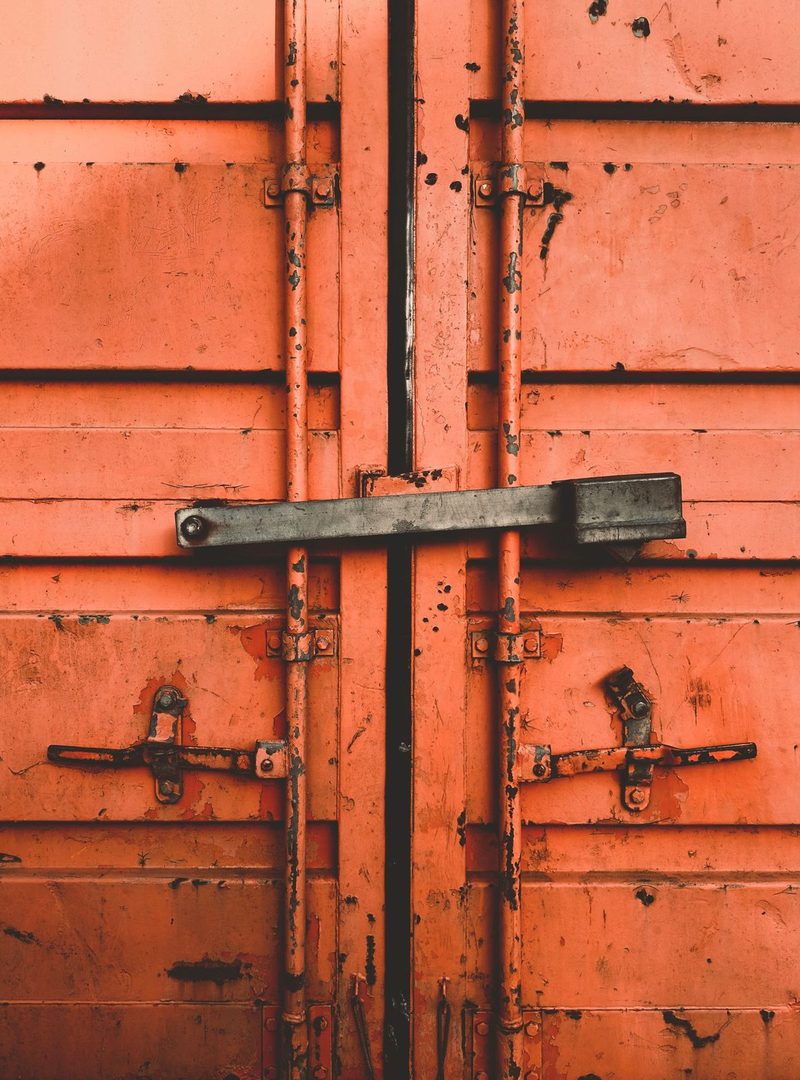
The container loading check (CLC) is the last pair of eyes. The inspector watches the loading, counts the cartons, spots damage from handling and photographs the seal number. It stops short shipping and gives you evidence if the seal arrives broken.
Inspection companies in most manufacturing regions offer these services. You send the order details, the specification and your AQL levels. They send an inspector on the agreed day and deliver a report, usually within 24 hours, with photographs and a clear pass or fail.
Over time, these reports build a quality history that shows you which suppliers need a closer watch.
What do freight forwarders and customs brokers do?
A freight forwarder runs the journey from the factory to your door: it chooses carriers, combines cargo and manages the documents. A customs broker prepares your entry so the goods clear the border legally and without delay.
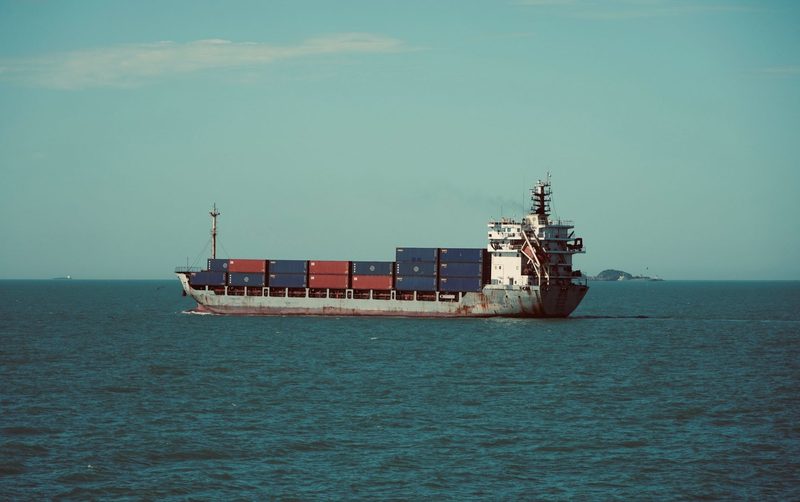
The forwarder does not own ships or planes. It plans the route. It takes your shipment details, Incoterm and dates, books space with a shipping line or an airline, arranges trucks for collection and delivery, and prepares the bill of lading, the title document for the cargo. It can combine your freight with other shipments to lower the cost, advise on packing for the carrier’s rules and arrange cargo insurance. Most forwarders offer tracking and will tell you if a ship is delayed.
At destination, the forwarder works with a customs broker. Most countries ask importers to register before their first shipment clears, often with a tax or customs number, and your broker will tell you which registration applies and help you file it. The broker classifies your product under its Harmonized System (HS) code, works out the duty, files the entry and pays the duties for you. It also checks for special rules, such as approvals for food contact items or for electronics. A mistake in classification or valuation can lead to audits, fines or holds that cost more in storage than any duty saved.
Cargo insurance matters. A carrier’s liability is limited by international conventions. Marine cargo insurance covers the full value of your goods against physical loss, damage and general average, the rule of the sea under which every cargo owner shares the cost when part of the cargo is sacrificed to save the ship. Your forwarder can usually quote an all risks policy for a fraction of one percent of the shipment’s value.
How do you stop risk building up across many orders?
A risk register with a review every quarter turns your buying history into an early warning. You watch supplier performance, currency moves, freight rates and rule changes, so you can adapt before a crisis.
Start with a simple tracker. List each supplier, the Incoterm and payment terms you use with them, the transit times and how much they vary, and any quality issues from recent inspections. Score each risk on two scales: how likely it is, and how much it would hurt. A sudden tariff rise might score high on harm but low on likelihood for a stable route. A factory with a rising defect rate scores high on both. The result shows you where to focus.
For each high risk, write down what you will do about it. Find a second source in another region. Hold two more weeks of safety stock. Move from EXW to FOB. Book air freight space early for the busy season. Give each action an owner.
Review the register at least every quarter with fresh data from your forwarder, your inspection reports and the news. Within a year you will see patterns. You may learn that a supplier always struggles in the same season, when many workers take a long seasonal break. You will notice a port that gets congested before a major holiday. Those patterns let you order earlier, change routes, or inspect more closely in those weeks. It costs little more than a spreadsheet and an hour each quarter.
Quick reference
| Part | How it works | Where to start |
|---|---|---|
| Who handles it | You, an agent, or a supplier who handles the order | Choose the one that shows you the evidence at each step |
| Incoterm | A rule of the ICC that splits cost and risk | FOB if you have a forwarder; CIF, DAP or DDP if the seller arranges freight, with freight shown as its own line |
| Payment | LC, documentary collection, open account | LC with a pre shipment inspection for a first order; open account and credit insurance later |
| Quality control | Four inspections with AQL sampling | AQL 2.5 for major and 4.0 for minor defects in consumer goods, tighter for high value goods |
| Logistics | A freight forwarder and a customs broker | A forwarder with an office at destination and live tracking |
| Risk | A risk register reviewed every quarter | Start with a spreadsheet; add tools as volume grows |
Questions
Can one company handle all of this for me?
Yes. A supplier who sources, inspects, documents and ships takes these steps off your desk. Ask them to show you each layer: where the product is made, the inspection report with photographs, every document before the goods ship, and a price with freight and duty as separate lines.
Is a 30 percent deposit by TT normal, and is it safe?
It is common, and how safe it is depends on the controls around it. A 30 percent wire with no inspection plan and no conditions on the final payment means you are trusting the supplier with a large sum. Pair the deposit with a production timeline, a required pre shipment inspection, and a balance paid against documents or a letter of credit, so the supplier has every reason to deliver goods that match your order.
How much does a pre shipment inspection cost, and is it worth it?
A day of inspection by a reputable firm usually costs between 250 and 400 dollars, depending on the product and the location. Compare that with reworking a full container or throwing away goods you cannot sell. For almost any order over a few thousand dollars, it is one of the best returns you can get.
Do I need someone on the ground?
A visit is worth making, but you cannot be on the factory floor every day. Someone local should follow production between your trips, as long as you see their reports.
What is the most common customs mistake new importers make?
Using the wrong Harmonized System code, or declaring a lower value to save duty. Both raise red flags. Customs systems compare declared values with what similar goods usually cost, and a flagged entry means delays, storage fees and possible penalties. Have your broker classify the product from the official tariff and declare the real transaction value.
Ready to source your next product? Surfing Solutions handles the whole chain for you: finding and checking the manufacturer, the terms, the inspections, the freight and the customs. You see the evidence at every step: where the product is made, the inspection report with photographs, and every document before the goods ship. Tell us what you need.